

Why inverters trip off the grid.
What makes a solar plant disconnect, what each trip costs, and how operators find and reduce them.
GridMarshal, November 2026
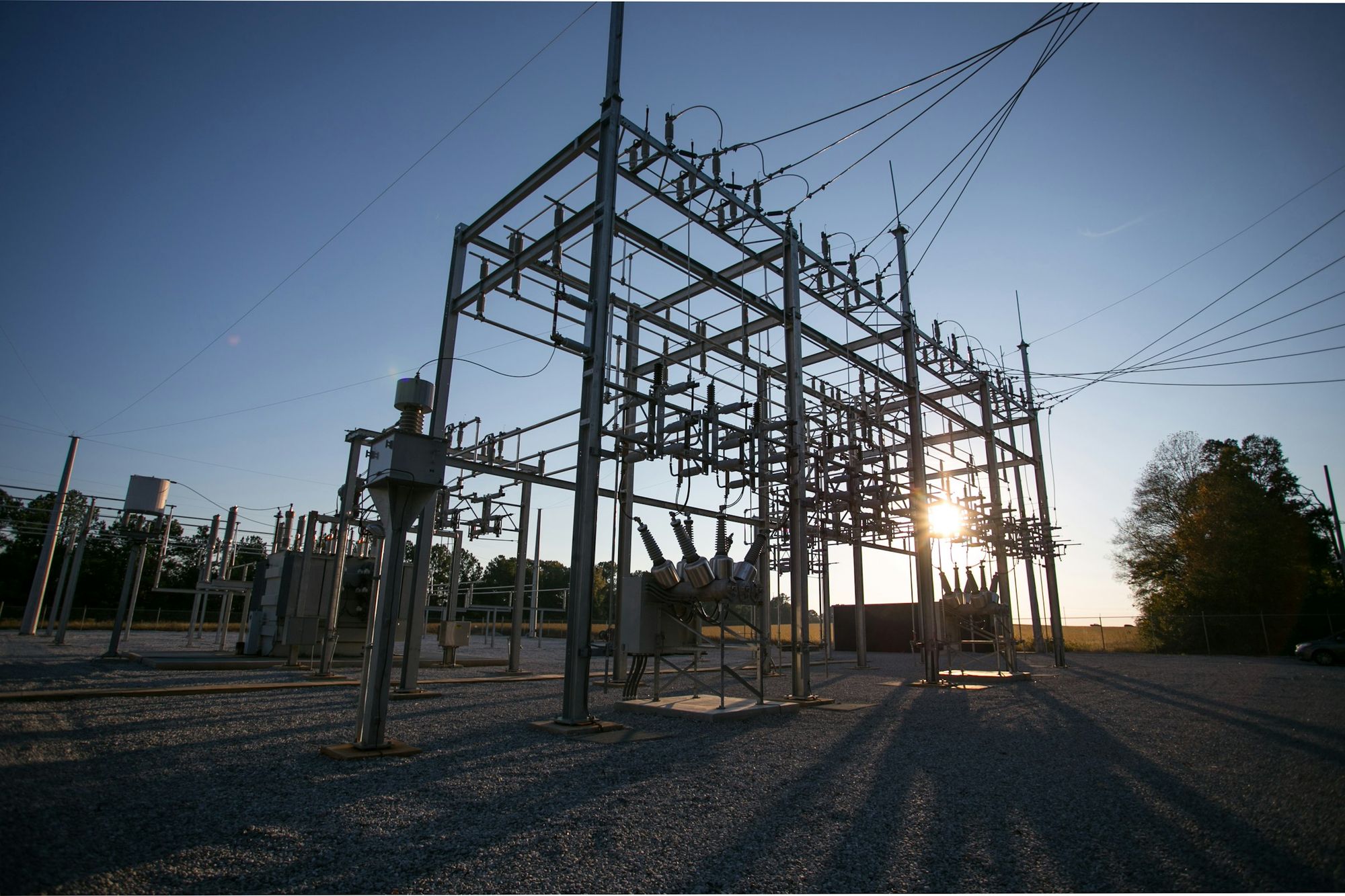
A safety stop, not a breakdown.
An inverter disconnects when the grid it sees moves outside its settings.
Every grid-connected inverter watches the voltage and frequency at its terminals. When either moves outside the limits set in the inverter, its protection opens the connection and the inverter stops exporting.
After the grid returns within limits, the inverter waits for a set time, checks again, and reconnects. The plant looks normal afterwards, which is why trips are easy to miss.
In Pakistan, NEPRA's Prosumer Regulations, 2026 permit a variation of plus or minus 5% in voltage and plus or minus 1% in frequency for systems connected under them. They also require automatic means to prevent reconnection until the grid is stable.
Four reasons a plant drops off.
Many trips start on the grid side, some in the plant itself.
Voltage too high
On a weak feeder, exported power raises the local voltage. At midday, when output peaks, it can cross the inverter's upper limit.
Voltage too low
Faults on the network, large motors starting nearby or a heavily loaded feeder can pull the voltage below the lower limit.
Frequency out of range
When the system frequency moves beyond the set band, every inverter on that setting disconnects together.
Loss of grid
When the feeder is switched off, for a fault or for load-shedding, anti-islanding protection stops the inverter. This is correct and keeps line crews safe.
Some stops look like grid trips but start inside the plant: low insulation resistance on the direct current side, earth leakage, or an inverter that overheats. These need a different fix, so tell them apart first.
Short stops at the best hours.
Lost energy is the power the inverter should have made, multiplied by the time it was off.
High-voltage trips cluster around midday on clear days, when the plant should make the most. A trip at that hour costs more than the same trip in the evening.
Example, with assumed figures. An inverter should deliver 80 kW at midday. It trips 6 times a day and stays off for 5 minutes each time before it reconnects. That is 30 minutes, or 0.5 hours, a day.
Lost energy per day: 80 kW × 0.5 h = 40 kWh. Over 30 such days: 40 × 30 = 1,200 kWh, from one inverter. Multiply by your own price per kWh to see the money.
Let the pattern tell you the cause.
Compare inverters with each other and with the time of day.
- All inverters drop together: the cause is usually the grid or the connection point.
- One inverter drops alone: look at that inverter, its settings and its cable run.
- Trips near midday on sunny days: suspect high voltage from export on a weak feeder.
- Long stops at fixed hours: compare with the load-shedding schedule for the feeder.
- Read the inverter event log: the fault code separates over-voltage, under-voltage, frequency and insulation faults.
- Count the energy, not only the events: rank trips by kWh lost so the team fixes the costly ones first.
Fix the cause, never the protection.
Some trips can be designed out, some must be worked through with the distribution company.
- Check the settings: confirm each inverter runs the grid settings that were approved for the site, and that all inverters match.
- Check the cable run: a long or undersized cable between inverter and connection point adds voltage rise when exporting.
- Talk to the distribution company: transformer tap settings and feeder loading are theirs to change, and they need your trip data to act.
- Use the inverter's own grid functions where the inverter supports them and the distribution company allows it, such as reducing output instead of disconnecting.
- Do not widen the limits without approval. The protection is there for safety, and the rules require it.
- Report grid outages separately from plant faults, so owners see which losses the operations and maintenance (O&M) team can fix.
See every trip, and what it cost.
For O&M companies, EPC firms (engineering, procurement and construction) and owners running solar plants.
- Expected output per inverter compared with actual, with a deviation alarm
- Inverter heat maps and availability views, so one inverter that keeps stopping stands out
- Communication alarms when a plant stops sending data
- Tickets that record the energy lost, with alerts by e-mail, Telegram and phone push
- Analysis with up to four axes to line up inverter output with irradiance and meter readings

Find the trips your plants are hiding.
A walkthrough of GridMarshal with your own plants in mind.